
Blueberry Lemon Sourdough Bread-Tangy Sweet Loaf
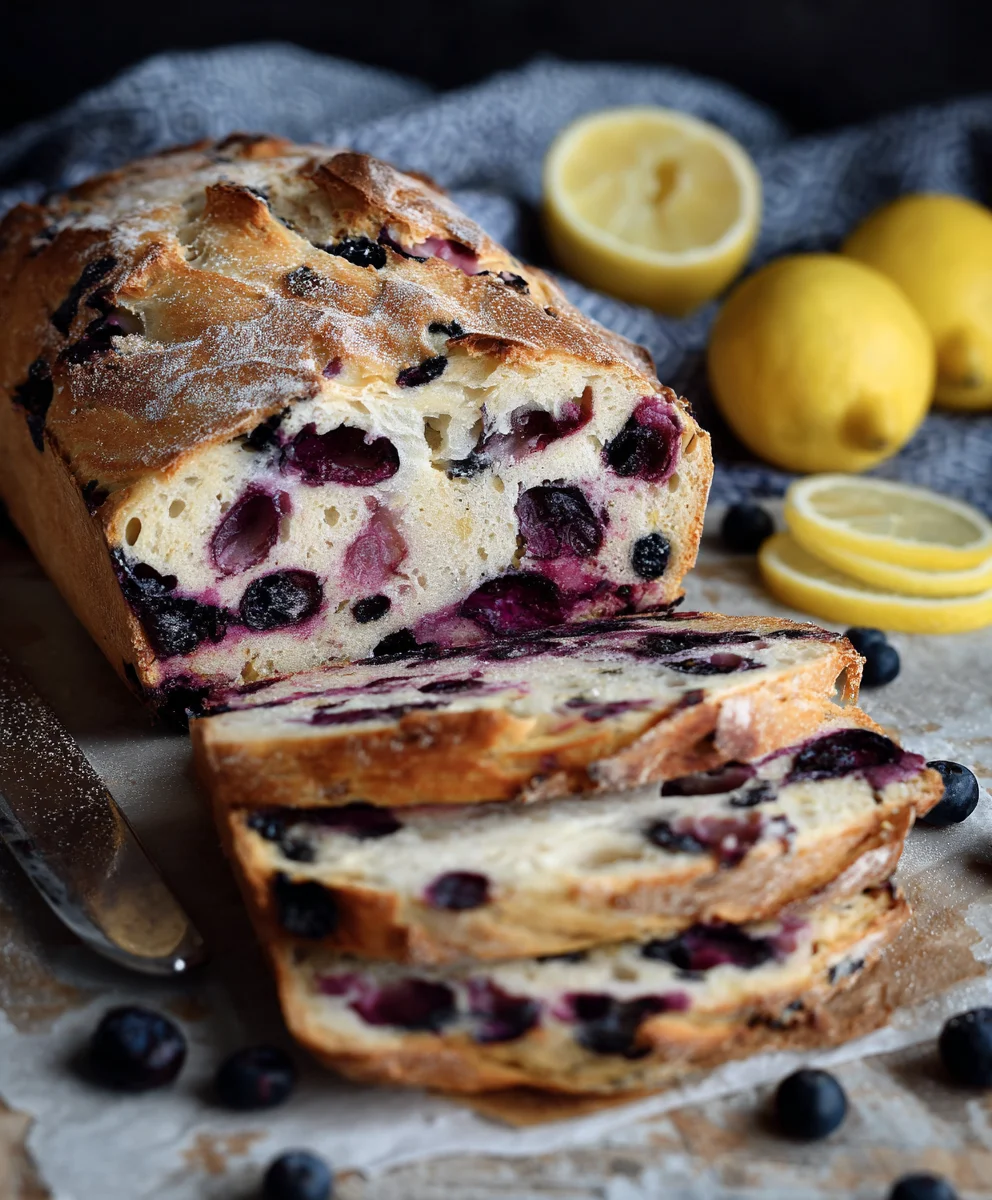
Blueberry Lemon Sourdough Bread is more than just a delicious baked good; it’s a symphony of tangy, sweet, and slightly sour notes that awakens your senses with every bite. Imagin extracte the bright, zesty punch of fresh lemon zest mingling with the bursting sweetness of plump blueberries, all cradled within the wonderfully chewy and aerated crum extractb of a perfectly fermented sourdough. This isn’t your average loaf. What makes Blueberry Lemon Sourdough Bread so utterly irresistible is the harmonious interplay of flavors and textures. The natural tang of the sourdough starter provides a complex base that beautifully balances the fruit and citrus, creating a depth of flavor that store-bought bread simply cannot replicate. It’s the perfect breakfast treat, a delightful afternoon snack, or even a sophisticated dessert bread, especially when served warm with a smear of creamy butter or a dollop of Greek yogurt. Prepare to fall in love with this extraordinary creation.
Ingredients:
- 3 cups bread flour
- 1⅓ cups lukewarm water
- ¾ cup sourdough starter (active, bubbly, and well fed)
- 3 tablespoons white sugar
- 1 teaspoon salt
- 1¼ cup blueberries (fresh is easiest)
- 1 tablespoon lemon zest
Mixing the Dough
- In a large mixing bowl, combine the bread flour, lukewarm water, and active sourdough starter. Use your hands or a sturdy spatula to mix until just combined and no dry flour remains. The dough will be shaggy and sticky at this stage, which is perfectly normal. This initial mix is often referred to as the autolyse, and it helps to hydrate the flour and begin extract gluten development without much effort. Let this mixture rest, covered with a damp cloth or plastic wrap, for about 30 minutes to an hour. This resting period allows the flour to absorb the water, making the dough more pliable for the next steps.
- After the autolyse, it’s time to add the remaining ingredients. Sprinkle the salt, white sugar, and lemon zest over the surface of the shaggy dough. Gently fold and squeeze the dough to incorporate these additions. Don’t worry about achieving perfect uniformity just yet; the goal is to distribute the salt, sugar, and lemon zest throughout the dough. The sugar will help to feed the yeast in the sourdough starter and contribute to a lovely golden crust, while the lemon zest will impart a bright, fragrant aroma and flavor that beautifully complements the blueberries. Once these are roughly incorporated, let the dough rest for another 15-20 minutes.
Developing the Dough
- Nogin extractwe begin the process of developing the gluten structure through a series of stretches and folds. Wet your hands slightly to prevent sticking. Take one side of the dough, stretch it upwards gently, and fold it over to the opposite side. Rotate the bowl a quarter turn and repeat this process, stretching and folding, for all four sides of the dough. You should feel the dough becoming stronger and more elastic with each set of folds. Perform these stretches and folds every 30 minutes for the next 2 to 3 hours, or until the dough passes the windowpane test. The windowpane test involves gently stretching a small piece of dough until it becomes so thin that you can see light through it without tearing. This indicates that your gluten network is well-developed and ready to hold the shape of the loaf.
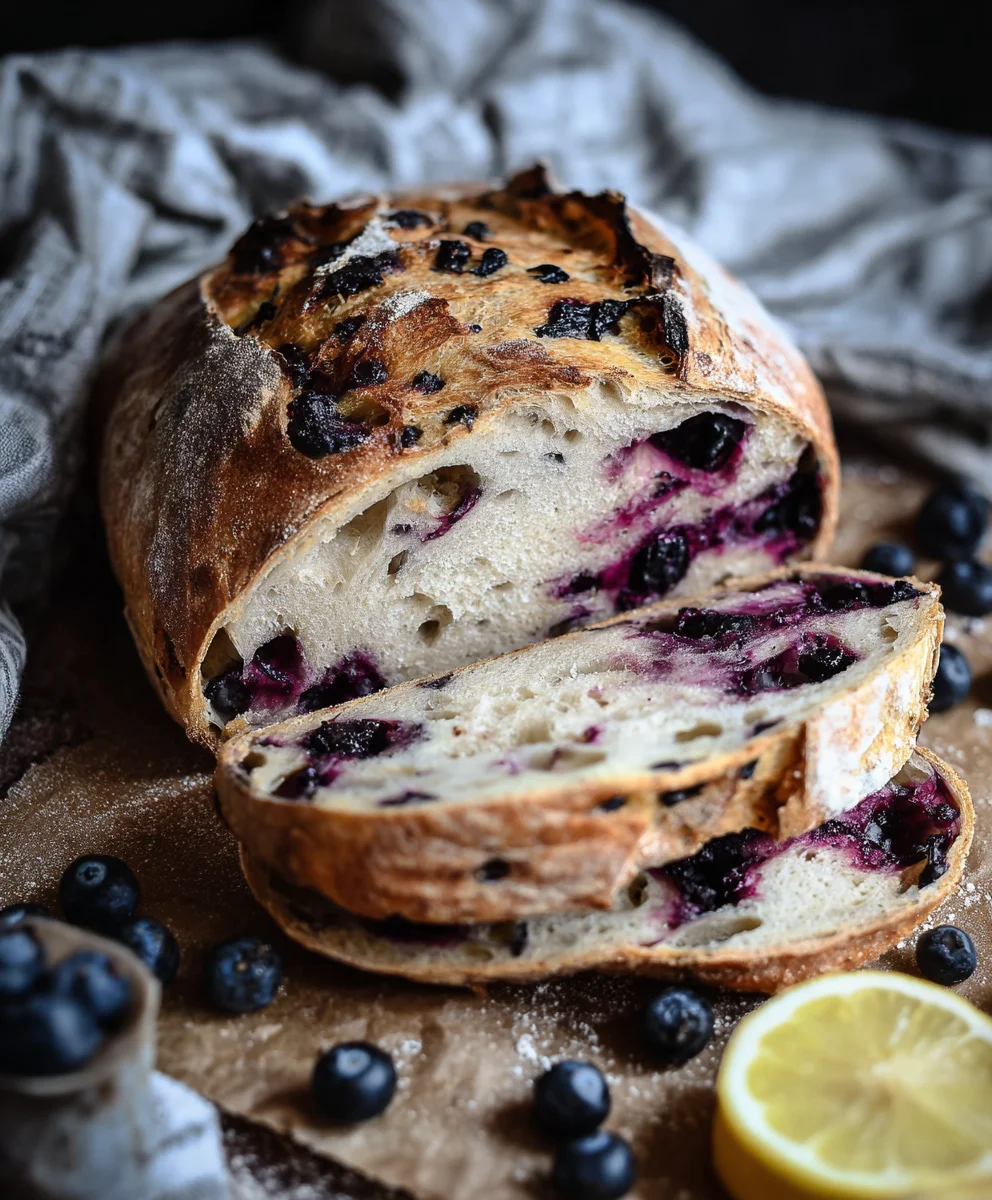
- Once your dough has developed sufficient strength, it’s time to incorporate the star of our show: the blueberries. Gently scatter the fresh blueberries over the surface of the well-developed dough. Instead of aggressively kneading them in, which can bruise and break them, use your hands to carefully fold the dough over the berries, as you did during the stretch and fold process. Repeat this folding action a few times to distribute the blueberries as evenly as possible throughout the dough. Some berries will inevitably remain on the surface, and that’s fine. They will bake into a beautiful mosaic within the finished bread. Allow the dough to rest, covered, for another 30 minutes after incorporating the berries.
Shaping and Baking
- Gently turn the dough out onto a lightly floured surface. Try to handle the dough as minimally as possible to preserve the air bubbles that have developed. Shape the dough into your desired loaf form – either a round boule or an oblong batard. To shape a boule, gently cup your hands around the dough and pull it towards you, tucking the edges underneath to create surface tension. For a batard, fold the top third of the dough down to the center, then the bottom third up over the first fold, and then gently roll it up like a jelly roll, sealing the seam. Place the shaped dough, seam-side down, into a well-floured proofing basket (banneton) or a bowl lined with a floured tea towel. Cover and let it proof at room temperature for 1-2 hours, or until it looks puffy and has increased in volume. For a deeper flavor and better oven spring, you can also refrigerate the dough for 12-24 hours for a slow, cold proof.
- Preheat your oven to 450°F (230°C) with a Dutch oven or baking vessel inside for at least 30 minutes. Carefully remove the hot Dutch oven from the oven. Gently invert the proofed dough into the hot Dutch oven. Be cautious, as the Dutch oven will be extremely hot. If you have a piece of parchment paper beneath your dough in the proofing basket, you can use it to help lower the dough into the Dutch oven. Score the top of the dough with a sharp knife or lame to allow for controlled expansion during baking. Immediately cover the Dutch oven and place it back into the hot oven.
- Bake the bread, covered, for 20 minutes. After 20 minutes, carefully remove the lid of the Dutch oven. Reduce the oven temperature to 425°F (220°C). Continue to bake, uncovered, for another 20-25 minutes, or until the crust is a deep golden brown and the internal temperature of the bread reaches 205-210°F (96-99°C) when measured with an instant-read thermometer. The uncovered baking period allows the crust to crisp up beautifully and develop a rich color.
- Once baked to perfection, carefully remove the Blueberry Lemon Sourdough Bread from the Dutch oven and place it on a wire rack to cool completely. Resist the temptation to slice into it immediately! Allowing the bread to cool fully is crucial for the crum extractb structure to set properly. As it cools, the steam trapped inside will redistribute, creating that perfect tender interior. Once completely cool, slice and enjoy the delightful tang of sourdough, the burst of fresh blueberries, and the bright zest of lemon.
Conclusion:
You’ve now unlocked the secret to creating a truly delightful Blueberry Lemon Sourdough Bread. This recipe brings together the tangy depth of sourdough with the vibrant burst of fresh blueberries and the zesty brightness of lemon. The result is a loaf that’s both comforting and invigorating, perfect for any occasion.
We hope you enjoy baking and savoring this wonderful bread. It’s fantastic served warm with a smear of butter, or consider a drizzle of honey for added sweetness. It also pairs beautifully with a dollop of Greek yogurt or a light cream cheese spread. For a delightful dessert, try toasting slices and serving with a scoop of vanilla ice cream.
Don’t be afraid to experiment! If you don’t have fresh blueberries, frozen ones work well, though you might need to adjust baking time slightly. Consider adding a touch of lavender for an extra floral note, or swap out the lemon zest for orange zest for a different citrus profile. The world of sourdough is your oyster!
Frequently Asked Questions about Blueberry Lemon Sourdough Bread:
Q: Can I use dried blueberries instead of fresh?
A: While fresh blueberries provide the best burst of flavor and texture, you can use dried blueberries. If you do, it’s a good idea to soak them in warm water for about 15-20 minutes before draining and folding them into the dough. This will help rehydrate them and prevent them from becoming too hard during baking.
Q: My sourdough starter isn’t very active. Will this recipe still work?
A: A healthy and active sourdough starter is crucial for a good rise and tangy flavor in Blueberry Lemon Sourdough Bread. If your starter is sluggish, it’s best to “feed” it consistently for a few days leading up to baking to ensure it’s vigorous and bubbly. An inactive starter may result in a denser loaf.
Blueberry Lemon Sourdough Bread-Tangy Sweet Loaf
A delightfully tangy and sweet sourdough loaf bursting with fresh blueberries and bright lemon zest, perfect for any occasion.
Ingredients
-
3 cups bread flour
-
1⅓ cups lukewarm water
-
¾ cup sourdough starter (active, bubbly, and well fed)
-
3 tablespoons white sugar
-
1 teaspoon salt
-
1¼ cup blueberries (fresh is easiest)
-
1 tablespoon lemon zest
Instructions
-
Step 1
In a large mixing bowl, combine the bread flour, lukewarm water, and active sourdough starter. Mix until just combined and no dry flour remains. Let this mixture rest, covered, for 30 minutes to an hour. -
Step 2
Add salt, white sugar, and lemon zest to the dough. Gently fold and squeeze to incorporate. Let the dough rest for another 15-20 minutes. -
Step 3
Perform stretches and folds every 30 minutes for 2-3 hours, or until the dough passes the windowpane test, indicating well-developed gluten. -
Step 4
Gently fold in the blueberries, distributing them as evenly as possible. Allow the dough to rest, covered, for another 30 minutes. -
Step 5
Shape the dough into a boule or batard and place it seam-side down into a well-floured proofing basket. Cover and proof at room temperature for 1-2 hours, or refrigerate for 12-24 hours. -
Step 6
Preheat oven to 450°F (230°C) with a Dutch oven inside. Carefully transfer the proofed dough into the hot Dutch oven, score the top, cover, and bake for 20 minutes. -
Step 7
Remove the lid, reduce oven temperature to 425°F (220°C), and bake uncovered for another 20-25 minutes until deeply golden brown. -
Step 8
Remove from Dutch oven and cool completely on a wire rack before slicing and enjoying.
Important Information
Nutrition Facts (Per Serving)
It is important to consider this information as approximate and not to use it as definitive health advice.
Allergy Information
Please check ingredients for potential allergens and consult a health professional if in doubt.